

👉 👉 Part 1 —The Soil Remembers Every Act Of Care
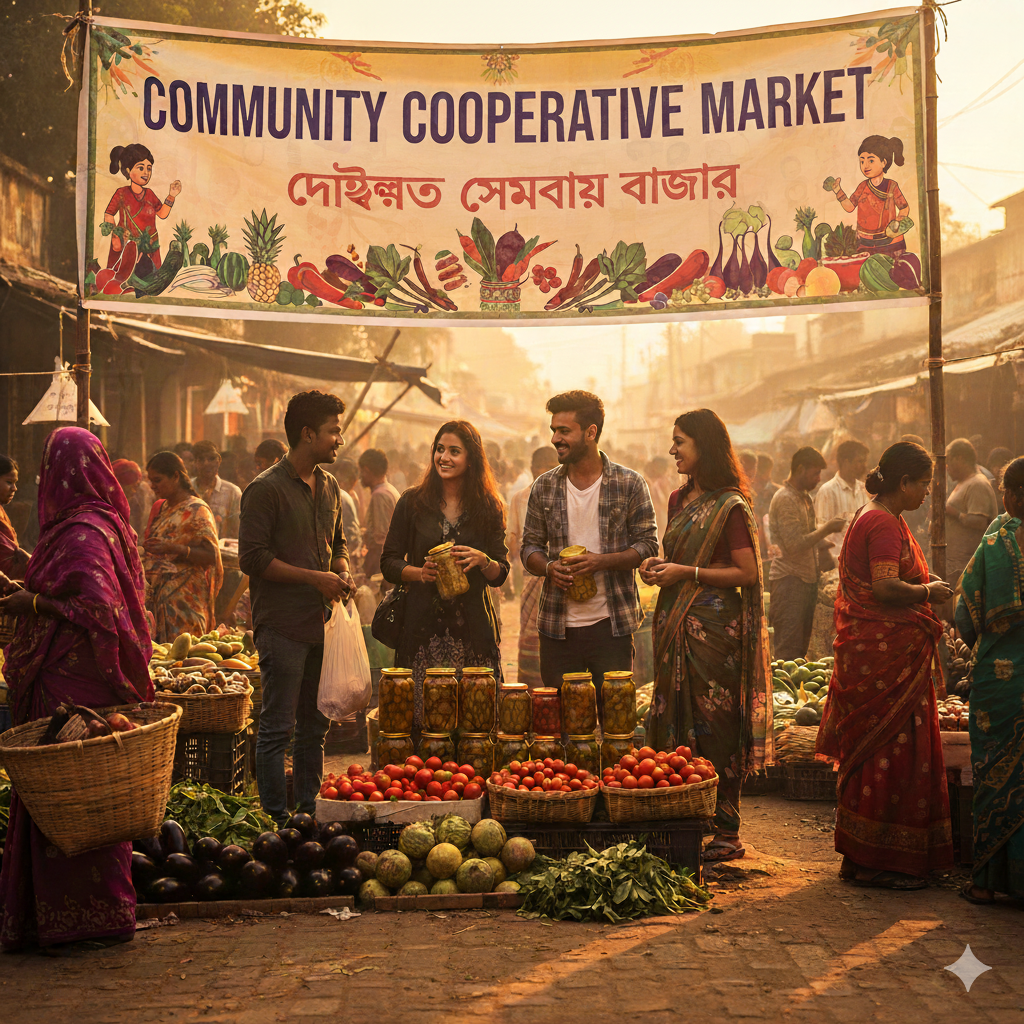
A pond that had been a memory returned to work: neighbours dug with borrowed shovels, the school’s midday lunch program pledged to buy vegetables from a new women’s plot, and a cooperative market stall opened beneath the banyan tree. Where there had been salt-scoured furrows and empty verandas, there were now beds of finger-millet, rows of native vegetables and a small apiary humming in the margins. Children brought rhymes about the pond to school, elders taught seed-sorting under the neem’s shade, and a single day’s sale gave the school cook enough to promise fresh greens every week.
📑 Table of Contents
- 👉 👉 Part 1 —The Soil Remembers Every Act Of Care
- 👉 👉 Part 2 — Diagnosis: Why rural economies are fragile
- 👉 A Concise, Data-Minded Diagnosis (Qualitative Framing)
- 👉 The Human Costs — Beyond The Numbers
- 👉 👉 Part 3 — The Dharmic Framework: Principles of Conscious Farming
- 👉 Define Dharmic Agriculture
- 👉 👉 Part 4 — Regenerative Practices That Restore Soil & Yield
- 👉 Why this matters now
- 👉 Cover Cropping & Green Manures — Rebuild the Living Skin of the Land
- 👉 Agroforestry & Multi-Strata Systems — Diversify Income and Lock Carbon
- 👉 Reduced Tillage / Zero-Till — Lock Moisture and Labour Gains
- 👉 👉 Part 5 — Building Farm-to-Community Value Chains
- 👉 Why Markets Fail Smallholders: The Anatomy of Value Leakage
- 👉 Dharmic Market Design — Principles for Fair and Transparent Markets
- 👉 Models & Tools That Work (With How-To & Value Proposition)
- 👉 Financial Mechanism: Contract Farming With Fair Clauses & Producer-Owned Brands
- 👉 👉 Part 6 — Inclusive Finance & Regenerative Capital
- 👉 Problem Statement: Credit Traps & Mismatched Financial Products
- 👉 Solutions & Instruments (how they work in practice)
- 👉 👉 Part 7 — Governance, Institutions & Policy levers
- Why governance matters
- 👉 Who must be held accountable?
- 👉 👉 Part 8 — People & Capacity: Education, Culture & Youth Engagement
- 👉 Human Capital Needs — Recasting Extension as Co-Learning
- 👉 Cultural Levers — Revive Festivals & Local Markets to Celebrate Harvest & Craft
- 👉 Gender & Inclusion — Practical Rules for Fairness
- 👉 👉 Part 9 — Conclusion: People, Planet & Profit — A Dharmic Synthesis
- Recap of the Path
- 👉 Concrete 3-Line Kpis for Each Pillar to Adopt At Village Level
- Selected Citations & Further Reading (Key Sources Used)
- 📌 Related Posts
The soil remembers every act of care — not as a slogan but as a ledger written in roots, humus and returning water. That ledger pays out slowly, steadily, and with a dignity no credit note can match.
Why Rural Prosperity Needs Conscious Farming
Rural prosperity cannot be engineered only by subsidies or bridges; it is cultivated where regenerative farming practices meet an ethical economy—dharmic agriculture—that treats land, labour and market relationships as mutual trusts. Conscious farming is a twofold promise: ecological restoration (soil, water, biodiversity) and social justice (fair prices, shared value, intergenerational security). This is not nostalgia for old forms; it is an operational framework that aligns scientific soil science, agroecology and community finance with ethical principles such as stewardship, trusteeship and loka-sangraha (service of the world). The argument is simple and deep: long-term wealth in the countryside grows when ecological health and equitable value capture are designed into the same system.
Who’s responsible for rural decline?
Rural decline is a social product, assembled by many hands: outdated policies that reward short-term output, corporate value chains that extract margins and centralise profits, local choices shaped by debt and risk, and markets that favour scale over quality. Each actor — state, buyer, input supplier, financier, and farmer — holds a share of responsibility. Asking who’s to blame is not about finger-pointing alone; it is about designing accountability loops so actors must bear the cost of extractive choices and are rewarded for caretaking ones.
“Rural wealth is made in small, disciplined acts of care.”
👉 👉 Part 2 — Diagnosis: Why rural economies are fragile
👉 A Concise, Data-Minded Diagnosis (Qualitative Framing)
Rural fragility shows up in familiar patterns: declining soil fertility, shrinking incomes despite record yields in some commodities, indebtedness, youth migration, diminished on-farm biodiversity, and fragile local markets dominated by middlemen. Land that once supported multiple crops now bears chemical residue and compaction. Farms are smaller, but their exposure to volatile prices and costlier inputs has increased. The result is economic precarity disguised as productivity — a high-output, low-return trap where short-run yields replace resilient livelihoods.
👉 Systemic causes — how the system produces fragility
- Extractive value chains. When processing, branding and retail capture most downstream value, producers receive only raw-commodity prices. Farmers become price-takers, not price-makers.
- Monoculture incentives. Subsidies, procurement policies, and credit schemes often favour monoculture cash crops that maximize short-term output but erode soil and reduce resilience to pests, weather and market shocks.
- Subsidy distortions. Input subsidies (fertiliser, power) can shift decision-making from ecological gains to chemical dependence — creating costs that compound when subsidies fall away.
- Missing markets. Lack of local aggregation, cold-chains and branding makes it expensive for smallholders to access value-adding channels, forcing distress-sales.
- Financial exclusion. When formal finance is absent or punitive, villagers turn to informal lenders whose terms accelerate distress and land-loss.
- Education & extension deficits. Knowledge systems prioritise yield-focused extension rather than ecological literacy and market know-how.
👉 The Human Costs — Beyond The Numbers
Fragility is not only economic; it corrodes dignity. Health outcomes (malnutrition, pesticide exposure), fractured social relations, migration that empties culture and care networks, and the erosion of local knowledge are real costs. Distress is intergenerational: children inherit debt, depleted fields and a mindset where migration is the only route to dignity.
👉 Identify Actors and Incentives
- Policy makers: incentivise short-term yield through procurement and crop-specific supports.
- Corporates/retailers: centralise processing and branding, externalising ecological costs.
- Input firms: profit from product lock-in (chemical and seed packages).
- Financiers: lend without long-term seasonal understanding, magnifying vulnerability.
- Local leaders: sometimes capture short-term benefits rather than invest in commons.
Designing change requires altering these incentives: align procurement, market access and finance to reward regeneration and shared value.
👉 Distress-Sale Example
A small-holder millet farmer—after a pest spell—was offered an immediate cash advance by a local trader who also held the village’s unequal market access. The trader purchased the harvest at a discounted rate to recover the advance, then sold it to processors at a healthy markup. The family used the advance to pay high-interest informal credit and cover schooling; the result was a cycle: a compromised harvest, increased indebtedness, and little ability to invest in soil rest.
👉 How conscious farming heals root causes
Conscious farming rewrites incentives and restores agency: regenerative practices reduce input dependency, cooperative aggregation captures more value locally, village-level finance smooths risks, and knowledge networks increase adaptive capacity. Together these changes rebuild both ecological capital (soil, water, biodiversity) and economic capital (stable incomes, local enterprise), restoring dignity and resilience.
👉 👉 Part 3 — The Dharmic Framework: Principles of Conscious Farming
👉 Define Dharmic Agriculture
Dharmic Agriculture is not merely a label; it is an operational ethics-for-farming that treats the landscape as a living trust for present and future generations. It combines ecological science with principles drawn from the dharmic idea of duty: stewardship of resources, intergenerational justice, reciprocity with non-human life, and a service-orientation (loka-sangraha). These values become measurable practices when translated into soil health targets, cooperative governance, and market rules that reward shared prosperity.
👉 Core Ethical Principles (each with short practice and measurable outcomes)
🌟 1. Stewardship — Treat Soil And Water As Trustees
Definition: Stewardship reframes land and water as assets held in trust for future kin and community, shifting decisions toward long-term maintenance rather than short-term extraction.
Practice: regular soil testing, crop rotations (legume + cereal rotations), cover cropping in fallow seasons, contour bunding, and managed aquifer recharge where suitable.
Measurable outcomes: increase in soil organic carbon (SOC) percentage, improved infiltration rates, lower fertilizer dependency, higher water-use efficiency.
🌟 2. Minimal Harm — Prefer Regeneration to Extraction
Definition: Choose practices that restore rather than deplete: minimise single-use agrochemicals, avoid aggressive tillage, and encourage biological pest control.
Practice: phased elimination of single-use synthetic pesticides, integrated pest management (IPM), adoption of composts and biofertilisers, and no-till or reduced-till zones.
Measurable outcomes: reduced pesticide residue in soils and food, decreased input costs per hectare, increased beneficial insect biodiversity (pollinators, natural predators).
🌟 3. Equitable Sharing — Fair Value Distribution Across the Chain
Definition: Value should accrue to those who steward the land; equitable sharing corrects extraction where intermediaries capture disproportionate margins.
Practice: producer cooperatives, shared processing units, direct-market arrangements (CSA — community-supported agriculture), price floor agreements, and profit-sharing contracts.
Measurable outcomes: higher producer share of consumer rupee, increased average household income, lower incidence of distress-sale events.
🌟 4. Local Self-Reliance — Shorten Supply Chains and Rebuild Local Markets
Definition: Shorter supply chains preserve value, reduce spoilage and allow local consumers to pay for quality and ecological benefits.
Practice: village food hubs, weekly local markets, value-added cottage processing (pickles, millet flours), school procurement policies (local first), and urban-rural CSA links.
Measurable outcomes: lower post-harvest losses, higher retention of value inside the village economy, improved nutrition outcomes for local children (via school lunch sourcing).
🌟 5. Learning & Humility — Continuous Local R&D
Definition: Farming is a living science; villages must cultivate curiosity, experiment and record in order to adapt.
Practice: farmer field schools, local seed libraries, trial plots, cyclical learning sessions, and simple data-capture (yield records, pest incidence diaries).
Measurable outcomes: adoption rate of proven practices, yield stability over time, increase in crop-diversity indices.
👉 Link each principle to measurable outcomes
Every ethical principle here is translatable into metrics: SOC%, producer share of consumer rupee, household income, biodiversity index, and youth employment rate in-farm/non-migration. These metrics create the accountability loop that turns dharma into governance.
👉 Dharma terms for policymakers
- Loka-sangraha: policy framed for the welfare of the wider world — design procurement and investment for community resilience.
- Trusteeship: state and communities act as custodians of natural capital; policies should secure commons and reward care.
- Svadharma: encourage vocation-led roles (farmers as custodians) rather than forcing industrial models that erase local purposes.
👉 Operationalising the Dharmic Framework — practical translation into on-farm and institutional actions
A. From principle to field: a short operational checklist
- Soil baseline and plan: test SOC, pH, nutrient profile; set a 3-year SOC target and a crop-rotation plan.
- Fallow & cover strategy: map fallow fields and deploy cover crops (legumes, grasses) according to season and soil needs.
- Pesticide phase-down plan: establish reduction targets, train farmers in IPM, and start a community-managed biopesticide unit.
- Aggregation & value-capture: form producer groups, set up a community-scale dryer/packer, and create a simple profit-sharing schedule.
- Local market activation: begin weekly village market days; enroll the school or anganwadi as anchor buyers.
- Learning loop: calendarize monthly farmer-field-schools and a seasonal ‘experimenters’ day’ to test varieties, intercropping mixes and compost recipes.
B. Governance structures that embody dharma
- Village Stewardship Council (VSC): a democratically-elected body with rotation for key roles (soil custodian, finance steward, market liaison). The VSC holds the commons (community seed bank, pond management) and signs procurement agreements with local institutions.
- Transparent book-keeping: open accounts for pre-harvest credit, crop-advance repays and profit distribution documented at the mandi hall and public noticeboard or simple digital ledger.
- Accountability charter: the VSC’s charter specifies environmental outcomes (SOC targets), fairness outcomes (producer share floors), and a social fund for health/education.
C. Financing aligned to dharmic outcomes
- Regenerative micro-loans: repayable in produce or cash, linked to verified ecological milestones (e.g., adoption of crop rotation).
- Community guarantee pools: reduce interest costs and discourage predatory lenders.
- Blended finance for infrastructure: small public grants + community equity to build village hubs (pack-house, cold-store).
👉 Short practices and tools to start now
🌟 Quick Win #1 — Soil Test Day
Organise a community soil test day: collect composite samples, get baseline readings and publish the village soil profile. Action: prioritize 2 fields for immediate cover cropping based on results.
🌟 Quick Win #2 — Seed-Savers’ Circle
Begin a monthly seed exchange where elders and curious youth curate local varieties. Outcome: genetic diversity and community ownership of germplasm.
🌟 Quick Win #3 — School-Anchor Procurement
Negotiate a 10% procurement commitment from the local school for locally-produced produce for one month. Outcome: a stable buyer and nutrition improvement.
🌟 Quick Win #4 — Market Day Activation
Test a village market day for 6 weeks with local promos and a price-discovery board. Outcome: visible market and price transparency.
👉 Measurement & Accountability — Turning Dharmic Claims Into Trackable Indicators
Core indicator set (minimum viable):
- Soil Organic Carbon (SOC) — measured annually.
- Producer share of consumer rupee — tracked per commodity quarterly.
- Household median income (agricultural) — measured seasonally.
- Crop diversity index — count of species/varieties per farm per year.
- Youth engagement rate — % of rural youth employed locally or in ag-entrepreneurship.
- Pesticide use index — kilos active ingredient per hectare per year.
- Post-harvest loss % — per commodity, measured at community store.
Accountability loop: assign each indicator to an institutional owner (VSC + district extension + school procurement officer) and publish an annual “Village Stewardship Scorecard.” This scorecard creates social and administrative pressure to align incentives with dharmic outcomes.
👉 Anticipating pushback and pragmatic responses
Pushback: “Regenerative practices lower short-term yields or require more labour.”
Response: Frame the transition as a portfolio decision: short-term yield dips (if any) are offset by lower input costs, diversified income streams (value-added products), lower risk exposure (less pest-fuelled volatility), and improved long-term soil productivity. Labour investments can be seasonalised and communal labour-savings (e.g., shared mechanisation, cooperative composting) can offset peaks.
Pushback: “We need cash now; markets demand uniform commodities.”
Response: Use blended tactics: maintain a market-ready commodity parcel while transitioning the rest to regenerative plots. Simultaneously build local branding for quality and premium markets (nutrient-rich millets, native greens, organic pulses). Anchor buyers (schools, community kitchens, small urban CSAs) create early demand for differentiated produce.
👉 Link to broader policy levers
Policymakers should reorient incentives to reward care: procurement policies that prioritise regenerative-certified villages; subsidy re-design that rewards SOC improvement rather than blanket fertiliser subsidies; loan products tied to regenerative milestones; and regional market infrastructure investment to shorten value chains. Translating dharmic principles into policy means converting trusteeship into measurable, finance-linked outcomes.
👉 A Reflection
The first three parts sketch a premise and moral architecture: rural revival begins with seeing the landscape as a living trust and designing economic rules that reward care. The soil literally and metaphorically remembers — but memory needs record-keeping (metrics), institutions (VSCs, producer co-ops), and markets that value quality, not just quantity. If you accept the central claim — that rural wealth is made in small, disciplined acts of care — the rest of the article shows how to convert that ethic into soil recipes, market designs and finance structures that scale.
👉 👉 Part 4 — Regenerative Practices That Restore Soil & Yield
👉 Why this matters now
If rural prosperity is a tree, soil is the unseen root network that feeds every branch: food, income, culture, health. The practices below are neither romantic nor technical novelties — they are proven, scalable interventions that rebuild the frictionless exchange between microbes, roots, water and people. Each practice includes a quick how-to, tangible benefits, timeframe, and cost/benefit note so a village team can choose entry points and design a realistic transition over seasons.
👉 Cover Cropping & Green Manures — Rebuild the Living Skin of the Land
🌟 What it is
Cover crops are plants sown between or after cash crops to protect the soil surface, add biomass and cycle nutrients. Green manures are cover crops that are incorporated (or left as mulch) to feed soil organisms and add nitrogen when legumes are used.
🌟 How to do it
🔗 Read More from This Category
- Choose species by season & purpose: legumes (mung, sunn hemp, cowpea) for nitrogen; grasses (sorghum sudangrass, millet) for biomass and erosion control; mixed blends for resilience.
- Sow low-cost seed after main harvest or during short fallows at 5–10 kg/ha for many mixes. Use broadcast or shallow drilling depending on seed size.
- Manage termination 30–60 days after flowering for legumes (to keep N available) or at optimum biomass for grasses; incorporate lightly or leave as mulch.
- Follow-up: plant the next cash crop directly into the mulch or after minimal soil disturbance.
🌟 Benefits (short & long term)
- Short term (1 season): immediate erosion control, moisture conservation, weed suppression.
- Medium term (2–4 seasons): increased soil organic matter, improved soil structure, greater water infiltration and reduced runoff.
- Long term (3+ years): increased yield stability, reduced synthetic nitrogen needs through biological fixation.
Evidence & impact: multiple studies show cover crops raise soil organic carbon (SOC), improve hydraulic properties and increase macro-aggregate formation — translating to reduced erosion and higher resilience. (ScienceDirect)
🌟 Cost / Benefit & timeframe
- Costs: seed + sowing labour (low if broadcast), minimal equipment.
- Benefits: reduce fertiliser bills (legume fixes N), cut surface runoff and soil loss (reducing need for silt-removal in ponds), and increase yields over 2–4 seasons. SOC gains are often measurable after 2–3 years with strong cumulative gains thereafter. (ARCC Journals)

👉 Agroforestry & Multi-Strata Systems — Diversify Income and Lock Carbon
🌟 What it is
Interplanting trees (fruit, fodder, timber or nitrogen-fixing species) with crops and/or pastures to create vertical layers (canopy, understory, herbaceous) that mimic natural ecosystems.
🌟 How to do it
- Map your fields — identify boundaries, drainage lines, and wind corridors.
- Select species for multi-purpose use — fast-growing nitrogen fixers (Gliricidia, Sesbania), fruit trees (mango, guava), fodder (Leucaena), native natives for timber or non-timber forest products.
- Design spacing & timing — stagger tree rows with alley cropping (e.g., 6–8 m rows), intercrop among alleys for 2–4 years before canopy closure.
- Establish management plan — pruning for fodder, fruit management, and value-add processing schedules.
🌟 Benefits (short & long term)
- Short term: shade and wind buffering, immediate fodder from prunings.
- Medium term: diversified income streams (fruit, timber, fodder), improved microclimate for understory crops, and enhanced pollination.
- Long term: significant carbon sequestration and soil stabilisation. Evidence shows agroforestry systems sequester considerably more carbon and raise resilience compared to monoculture systems. (ScienceDirect)
🌟 Cost / Benefit & timeframe
- Costs: saplings, initial planting labour, early maintenance.
- Benefits: income diversification often begins within 2–4 years (fodder, early fruit) and continues into long-term timber/fruit returns; carbon and ecosystem services build over decades. Compared with monocrops, agroforestry reduces yield volatility and provides multiple cash or in-kind flows to households.
👉 Compost & Biofertilizers — Feed the Soil Microbiome
🌟 What it is
Compost is decomposed organic matter; biofertilisers are microbial inoculants (Rhizobium, Azotobacter, phosphate solubilizing bacteria, Trichoderma) that improve nutrient cycling and plant health.
🌟 How to do it
- Set up a community compost unit — pit or windrow system using crop residues, animal manure and kitchen waste; turn and manage moisture.
- Standard recipe — 3:1 brown (dry) to green (fresh) ratio; ensure thermophilic phase is reached to reduce pathogens.
- Apply 2–5 t/ha of mature compost along with seed/row placement; use biofertilizer seed coatings or nursery root dips for pulses and vegetables.
🌟 Benefits (short & long term)
- Improves microbial richness and soil structure, increases nutrient availability, reduces reliance on chemical NPK, and enhances drought resilience. Studies show compost significantly increases bacterial richness and sustained biomass responses, often visible within a single season and strengthening after 12 months. (MDPI)
🌟 Cost / Benefit & timeframe
- Costs: labour for collection and turning; modest infrastructure.
- Benefits: decreased fertiliser bills over multiple seasons, healthier seedlings, and higher net returns; many projects see plant response in the same season and measurable soil biological improvements after 6–12 months.
👉 Reduced Tillage / Zero-Till — Lock Moisture and Labour Gains
🌟 What it is
Reduced tillage or zero-till avoids deep ploughing; crops are sown directly into residues. This preserves soil structure and microbial habitats.
🌟 How to do it
- Start small: choose one plot to trial with a direct-seeder or manual drill.
- Retain residues on surface as mulch; avoid burning.
- Pair with cover crops and an integrated weed management strategy (mulch, spot-herbicide, manual weeding).
- Monitor compaction and drainage and adapt with occasional strategic loosening if needed.
🌟 Benefits (short & long term)
- Immediate labour and fuel savings (studies report lower land-preparation costs), improved water retention, reduced erosion, and a steady increase in soil aggregate stability over years. Some studies show zero-till increases net returns in certain systems, though outcomes vary by crop, rainfall and weed management approach. (Taylor & Francis Online)
🌟 Cost / Benefit & timeframe
- Costs: a seeder or rental cost and initial learning curve for weed control.
- Benefits: reduced ploughing cost (often ~20% savings in some contexts), water savings, long-term structure gains; observe labour/fuel savings immediately, and soil structural benefits within 2–3 seasons.
👉 Integrated Pest Management (IPM) — Resilience with Fewer Chemicals
🌟 What it is
IPM is a decision-based approach that uses biological control, cultural practices, mechanical controls and judicious chemical use only when economic thresholds are exceeded.
🌟 How to do it (practical starter)
- Monitor regularly — weekly pest scouting, use of simple traps (pheromone or sticky).
- Use cultural controls: crop rotation, trap crops, push-pull systems in cereals.
- Encourage natural enemies: maintain field margins, install insectary strips and avoid broad-spectrum pesticides.
- Biocontrol & targeted inputs: deploy Trichogramma, neem-based botanicals, or spot-spray microbial pesticides when thresholds are breached.
🌟 Benefits (short & long term)
- Reduced input costs, lowered pesticide residues, preserved beneficial insects, and improved human and ecological health. IPM has a strong evidence base for increasing profitability and reducing environmental harm when implemented with farmer training and monitoring systems. (Wiley Online Library)
🌟 Cost / Benefit & timeframe
- Costs: training, monitoring time and initial setup of traps/natural refuge.
- Benefits: lower chemical costs and improved yield stability; many smallholder programs show positive returns in 1–2 seasons after training and adoption.
👉 Water Harvesting & Micro-Irrigation — Equitable Water for Dry Seasons
🌟 What it is
Water harvesting captures runoff into ponds, bunds or recharge trenches; micro-irrigation (drip, micro-sprinkler) applies water precisely to crop root zones.
🌟 How to do it (practical starter)
- Map runoff & potential catchments. Start with a small pond or check dam on communal land.
- Install simple lined collection points or recharge pits; coordinate community labour for pond de-silting.
- Pilot a drip kit for high-value plots (vegetable beds, nurseries) with low-pressure pumps or gravity-fed systems.
- Set up transparent water-sharing rules administered by the Village Stewardship Council.
🌟 Benefits (short & long term)
- Increases water equity, reduces crop losses in dry spells, allows multiple cropping cycles, and improves fodder security. Micro-irrigation raises water-use efficiency dramatically and supports higher-value horticulture. When combined with pond management and recharge, entire village resilience improves.
🌟 Quick Cost/Benefit Summary (Short Vs Medium Term)
- Short-term wins (same season to 12 months): cover cropping (weed suppression/moisture), compost (plant response), IPM (reduced immediate pesticide bills), micro-irrigation pilots (higher yields in targeted plots).
- Medium-term returns (1–3 years): increased SOC, reduced synthetic fertiliser dependence, diversified incomes from agroforestry and value-add products, measurable reduction in input costs and reduced yield variance.
- Investment profile: most interventions have low-to-moderate upfront costs (seed, labour, saplings), with combined community units (compost station, seed bank, drip group purchase) offering economies of scale. SOC and productivity gains compound — payback is often seen within 2–4 seasons when combined with value-capture strategies.
Evidence across agronomic literature confirms that organic amendments, cover cropping, and agroforestry yield measurable benefits across biological and economic metrics when adopted at scale. (MDPI)
👉 Mini Case: Drought Resilience Through Intercropping + Compost
Ramesh (name changed), a 1-ha farmer in a rain-fed district, allocated 40% of his field to an intercrop of millet + pigeon pea with a winter sunn hemp green manure. He and his neighbours organised a community compost turn, applying 3 t/ha to the millet rows and used spot-application of Trichoderma in the nursery. During an unusually dry season, his millet produced 60% of the district average yields but sold at premium prices to urban buyers through a local CSA. Because input costs were low and the crop rotations preserved soil moisture, his household avoided distress sale and had surplus fodder from prunings.
Why it worked: diversified rooting patterns (cereal + legume) conserved moisture and the compost improved seedling vigour; market access via the CSA converted resilience into cash. Similar smallholder stories are supported by trials showing compost + intercropping increase drought resilience and net returns. (Frontiers)
🌟 “Where to start in one season” (3 simple actions)
- Soil Test + One Cover Crop Trial: test three plots, start a legume cover crop on one fallow plot.
- Community Compost Unit: organise collection points and make one full batch for application at the next sowing.
- Pilot a CSA Link or School Supply: secure a small anchor buyer (school or 20 urban subscribers) for one seasonal vegetable or millet lot to capture better prices.
👉 👉 Part 5 — Building Farm-to-Community Value Chains
👉 Why Markets Fail Smallholders: The Anatomy of Value Leakage
Smallholders face consistent market failures: information asymmetry (farmers don’t know end prices), scale mismatch (processing and retail require volumes), strict quality standards (grading and contamination rules), and a trust deficit (buyers and sellers lack direct, durable relationships). The result is value leakage — most of the retail rupee escapes the village, leaving farmers with little more than commodity prices and high volatility.
Key failure points: aggregation, storage, grading, branding, market access, and finance for pre-harvest activities. Tackling these structural gaps is as important as changing on-farm practice, because regeneration increases value only if the market recognises and pays for it.
👉 Dharmic Market Design — Principles for Fair and Transparent Markets
Dharma in market design means designing markets that treat economic exchange as stewardship rather than extraction. The design principles:
- Transparency: open price boards, published producer margins and real-time quality grades.
- Fair price discovery: simple auction or reverse-auction mechanisms where smallholders can compare offers.
- Shared infrastructure: community-owned pack-houses and cold storage to reduce spoilage and bargaining asymmetry.
- Traceability & provenance: establish a simple tagging system for regenerative/ethical produce so consumers can pay claims.
- Collective bargaining: scale via cooperatives or federations so villages negotiate on equal terms with processors and retailers.
👉 Models & Tools That Work (With How-To & Value Proposition)
🌟 Producer cooperatives & federations
What they solve: aggregation, bargaining power, access to finance and input procurement.
How to set up (starter): begin with 20–50 motivated farmers, elect a management committee with rotating roles, open a single community bank account, and register the FPO/co-op. Use transparent book-keeping and a simple share model (small entry fee + patronage dividend). Federate multiple village co-ops for processing and marketing scale. Federations help negotiate contracts and invest in processing units.
Value: raises producer share of the consumer rupee; enables investments in pack-lines and branding.
🌟 Village collection hubs & cold chain micro-hubs
What they solve: post-harvest loss and quality grading.
How to set up (starter): a central shed with sorting tables, a solar dryer, small cold-room (~1–3 tons), and basic weighing/scoring equipment. Charge nominal handling fees; co-op members receive rebatable credit for hub use. Co-location with the compost unit or seed bank reduces costs.
Value: reduces spoilage, enables batch grading and packaging, and supports direct urban deliveries.
🌟 Community-Supported Agriculture (CSA) & subscription models
What they solve: demand certainty and premium pricing for differentiated produce.
How to set up (starter): partner with an urban neighbourhood, set a subscription price per week/month, and define a delivery schedule. Use shared risk model: seasonal variability is covered by price pooling or rotation of products; consumers accept variable weekly baskets in exchange for local, fresh produce.
Value: predictable cashflow, stronger farmer-consumer ties, and price premiums for quality or regenerative claims. CSAs in India have followed cost-based models that ensure fair shares for producers. (urgenci.net)
🏷️ You Might Also Like (Similar Tags)
🌟 Aggregation + grading + value-addition (pickles, sauces, dried goods)
Why: value addition preserves product shelf life, captures retail margins and creates local employment.
How to set up: start with low-capex units — solar dryers, small-scale pulping and bottling (hygienic protocols), and batch labelling. Develop farmer-led recipes and standard operating procedures to pass basic food safety checks.
Value: turn perishable surpluses into year-round revenues and locally-branded products that sell at premium rates.
🌟 Digital marketplaces with embedded accountability
What they solve: traceability, provenance and access to urban buyers.
How to set up: use a simple marketplace platform (off-the-shelf or partner with an aggregator) that can record provenance, regenerative practices, and price history. Embed basic review systems to build trust.
Value: expands reach, shortens discovery time for buyers, and provides a data trail for impact finance.
👉 Financial Mechanism: Contract Farming With Fair Clauses & Producer-Owned Brands
Design principles for fair contracts:
- Price floor + quality premium: guaranteed minimum price with extra for verified regenerative practices.
- Shared risk clauses: if a systemic shock (flood/drought) reduces supply, buyers adjust volumes instead of forcing distress sales.
- Transparent grievance mechanism: an independent committee to adjudicate disputes.
- Payment timelines: 7–14 day settlement post-delivery, with digital receipts and public ledgering.
Producer-owned brands: cooperatives can invest in a brand identity tied to regenerative practice. The brand acts as a trust marker to urban consumers and supports premium pricing. Revenue recirculates as patronage refunds or community investments.
👉 Mini-playbook: 5 steps to start a village market hub
- Organise & Agree: form a steering group (10–15 farmers + 2 community leaders + 1 youth rep). Draft basic rules and a membership fee.
- Secure a space: repurpose an existing shed or community building; ensure proximity to road access.
- Install basic infrastructure: sorting tables, scales, a solar dryer and a small cold box (or rented cold storage). Keep receipts and a simple inventory log.
- Pilot aggregation: for 6 weeks, aggregate one commodity (e.g., leafy vegetables or millets) and sell to an urban CSA or school kitchen; track price, wastage and labour.
- Iterate & Formalise: use the pilot data to apply for a small grant or microbond to expand the hub and register as a co-op or FPO.
This simple sequence is low-capex, evidence-driven and immediately actionable. When paired with a local procurement anchor (school, hospital or factory canteen), the hub’s risk profile improves substantially.
👉 👉 Part 6 — Inclusive Finance & Regenerative Capital
👉 Problem Statement: Credit Traps & Mismatched Financial Products
Many rural households face finance designed for industrial agriculture: short-term, collateral-heavy, and product-centric (fertiliser/seed loans). The mismatch: smallholders need patient capital that tolerates seasonal variation and rewards ecological outcomes. When finance is inappropriate, it deepens dependence on predatory lenders and short-termism that undermines long-term stewardship.
👉 Dharmic Finance Principles — A Moral Architecture for Rural Capital
- Patient capital: accept longer horizons (3–7 years) for returns where soil and institutions are being rebuilt.
- Shared risk: collective guarantees and pooled reserves to avoid single-farm insolvency.
- Transparency: open accounts, public scorecards and clear use-of-funds rules.
- Regenerative returns: finance instruments that measure and reward soil carbon, water restoration, biodiversity and social outcomes.
These principles move finance from being an extractor to being an enabler of stewardship and intergenerational wealth.
👉 Solutions & Instruments (how they work in practice)
🌟 Community Savings & Credit Groups (SHGs) — grassroots backbone
Why: SHGs are local savings pools that provide quick, low-cost credit and build mutual accountability. Federating SHGs allows lending at larger scale, risk sharing, and pooled investments in community assets (dryers, pumps). Transparent record-keeping and regular audits reduce leakage and build credit histories for villages.
🌟 Regenerative bonds / green microbonds for community projects
What: small, tradable bonds issued by a village federation to fund community infrastructure (pond desilting, seed bank, cold-store). Bonds are marketed to ethical investors (urban cooperatives, CSR funds, impact investors) with clear use-of-proceeds and a modest coupon. India’s green bond frameworks show how labelled bonds can mobilise capital for environmental projects; similar models can be adapted for village-scale instruments. (CEEW)
Example structure: a ₹10 lakh village bond with 3-year tenor, 6% coupon, partial guarantee from a regional development agency and pre-agreed buyback by a corporate anchor (details below).
🌟 Outcome-based finance (pay-for-performance)
How: investors pay when verifiable outcomes are delivered (e.g., measured SOC increase, pond recharge volume, or verified reduction in pesticide use). Digital monitoring or third-party verification ties payouts to metrics, aligning incentives for both farmers and funders. This approach reduces moral hazard and channels finance to measurable regeneration.
🌟 Micro-insurance built on community mutuals (index-based and mutual funds)
Why: index insurance (rainfall, temperature thresholds) pays quickly based on public data, reducing claims delay. Community mutuals combine index insurance with pooled savings to cover gaps. Mobile delivery of index-based products has shown promise for wider coverage and reduced admin costs. (Wiley Online Library)
👉 Example Funding Structure: Village Water-Harvest Bond with Guaranteed Buy-Back
Objective: build a community pond, recharge pits and a micro-irrigation manifold to service 200 ha of communal and private plots.
Structure:
- Issuer: Village Federation (registered FPO)
- Size: ₹10,00,000 (INR 10 lakh) in 100 bonds of ₹10,000 each.
- Tenor: 3 years; Coupon: 6% annual (paid annually or in-kind as community produce).
- Use of proceeds: pond excavation, lining, recharge trenches, 2 drip-kits and training for maintenance.
- Guarantee: partial buyback (50%) by an agritech partner or local CSR fund if revenue targets are missed.
- Revenue stream: small user-fee for irrigation, sale of additional vegetables to CSA, and carbon credits from measured SOC increases (if certified).
- Verification: third-party monitoring of water volumes and SOC sampling at t=0 and t=36 months for outcome-based top-up payments.
Why it works: investors get a community-linked return; the buyer guarantee reduces investor risk; villagers gain access to long-term water infrastructure that increases productivity and resilience. Municipal and green bond precedents in India show institutional appetite for labelled environmental instruments that deliver measurable outcomes. (World Bank Blogs)
👉 Outcome-Based Finance: Pay-For-Performance Examples
- Soil-carbon payments: pay farmers for verified increases in SOC above baseline. Payment schedules can be front-loaded for measurable interim milestones (e.g., +0.2% SOC in year 2).
- Water restoration credits: downstream buyers who benefit from increased groundwater recharge pay the community a proportionate fee tied to measured uplift in seasonal water tables.
- Pesticide-reduction premiums: processors pay a premium to producers with documented lower pesticide indices.
These instruments require robust monitoring protocols and honest baselines. Low-cost digital tools (mobile reporting, simple IoT sensors for ponds, spot soil tests) make verification feasible at village scale.
👉 Risk Management & Governance Checklist for Funders
- Due diligence on governance: is the FPO/co-op properly registered, with rotating leadership and transparent records?
- Baseline data: soil tests, water table measures, and crop calendars must be documented before financing.
- Clear use-of-proceeds & ring-fencing: funds must be traceable and auditable with periodic public accounts.
- Community buy-in & consent: investors must ensure social buy-in through signed village charters and inclusive representation (women, youth).
- Performance monitoring plan: define metrics, frequency, and independent verification body.
- Contingency & exit: define performance shortfalls, buyback clauses and fund reallocation rules.
- Risk pooling & guarantees: small guarantee lines (from CSR, local business or district fund) reduce investor exposure.
- Grievance redressal: accessible channels for disputes with timelines for resolution.
A pragmatic funder integrates these governance steps into product design to ensure capital supports regeneration rather than short-term extraction.
👉 Practical notes on scaling finance ethically
- Start small, prove impact, then scale. Microbonds and local CSAs can provide initial cashflow proof-points to attract larger blended capital later.
- Blended finance — combine concessional grants with repayable capital to lower cost-of-capital for villages and crowd in private investors.
- Social return metrics — funders should track household incomes, nutrition, SOC and youth employment alongside financial returns to justify blended funding and attract impact investors.
👉 A Reflection
Regeneration is a technical practice and an economic redesign. On the field, cover crops, compost and agroforestry rebuild life; in the market, cooperatives, hubs and CSAs reclaim value; in finance, bonds, outcome payments and community mutuals convert long-term care into patient capital. The three domains must converge — agronomy, markets and money — to transform regeneration from a farming ethos into a durable rural economy.
Key promise: adopt two regenerative practices this season (cover crop + community compost), pilot a village market hub, and design a first-year microbond to fund a pond or cold-box; by the end of year one you will have measurable yield and cashflow improvements, and by year three you will see durable SOC gains and diversified income. The practical playbooks above map that journey into implementable steps.
👉 👉 Part 7 — Governance, Institutions & Policy levers
Why governance matters
Technical practices, market pilots and finance instruments will stall without the right governance scaffolding. Policy is the force-multiplier that converts village pilots into district-level transformations: it secures land, funds public goods, re-patterns incentives away from extraction, and embeds accountability into markets. The dharmic claim is simple — trusteeship of land and water requires public architecture that protects commons, rewards care, and holds extractors to account.
👉 What Policy Should Enable (big-picture goals)
🌟 Land tenure security. Tenure is the legal and psychological basis for long-term stewardship. Secure, transferable rights (including women’s co-titling options and long-term leases) allow farmers to invest in trees, soil-building and water structures without fear of dispossession. Secure tenure reduces short-term distress sales and enables intergenerational planning.
🌟 Public goods for the commons. Governments should prioritise investment in shared infrastructure that markets typically underprovide: ponds, recharge systems, village pack-houses, community compost stations, local research and extension oriented to agroecology, seed banks, and small cold-chains. These are collective assets that raise the productivity and resilience of all smallholders.
🌟 Pricing signals away from extraction. Subsidy and procurement architecture must be rebalanced to reward regeneration, not just per-hectare output. Time-phased incentives (see below) and procurement preferences for verified regenerative produce shift private decisions toward long-term care.
👉 Specific Policy Levers — Actionable, Time-Phased, And Pragmatic
🌟 1. Incentives for agroecological transitions (time-phased subsidies)
Design subsidies that support transition, not perpetual dependency. Example structure:
- Phase 1 (Years 0–1): Start-up grants to cover cost of seed mixes, compost equipment, drip kits, and training (conditional on community stewardship plan).
- Phase 2 (Years 1–3): Performance-linked payments — e.g., per hectare incentive for verified cover cropping, measurable reduction in synthetic input use, or documented SOC improvement.
- Phase 3 (Years 3+): Gradually reduce direct payments while unlocking market-based premiums (procurement + carbon/eco-services payments). This time-phasing motivates adoption and builds commercial sustainability. Policy frameworks encouraging agroecology are increasingly documented in international policy reviews and national transition proposals. (agroecology-coalition.org)
🌟 2. Procurement from local hubs (school feeding & public institutions)
Use public procurement — schools, hospitals, anganwadis, public offices — to create anchor demand for local, regenerative produce. A policy directive that stipulates a portion of institutional food budgets for locally-sourced and small-producer goods (with hygiene and grading supports) can create reliable demand and jumpstart village hubs. The Mid-Day-Meal / PM POSHAN programme already forms a policy space where local procurement can be operationalised with nutritional gains. Policy pilots and state manuals show pathways to local sourcing while maintaining food-safety standards. (PM Poshan)
🌟 3. Legal & institutional support for cooperatives and producer companies
Simplify registration, offer tax and credit support, and provide legal aid for Farmer Producer Organisations (FPOs) / Producer Companies so they can aggregate, brand, and access finance. Governments’ central and state schemes that promote FPO formation illustrate how legal recognition plus capacity support unlocks bargaining power for smallholders. Robust FPO policy support (registration incentives, credit guarantee facilities) is a proven lever to scale aggregation. (sfacindia.com)
🌟 4. Tax incentives and fiscal nudges for regenerative capital & community bonds
Tax credits, concessional tax rates, or priority underwriting for green microbonds and village-level regenerative bonds can lower the cost of capital for community projects (ponds, cold-chains, seed banks). Municipal and green-bond frameworks in India show fiscal appetite and institutional mechanisms that can be adapted for rural microbonds; these instruments unlock institutional capital into locally-governed assets. A small tax or regulatory nudge—like preferential treatment for verified regenerative projects—mobilises private investors and CSR funds. (CEEW)
🌟 5. Local Natural Resource Councils (village-level governance over water/trees)
Establish democratically-elected local councils that have legal authority for common-pool resource management: ponds, grazing commons, tree cover and village micro-watersheds. These councils would maintain local registries (who planted which tree, who maintains recharge), adjudicate minor disputes and administer community funds. Embedding participatory decision-making in law creates local custodians with clear responsibilities and accountability.
👉 Who must be held accountable?
Government agencies: Agricultural, water, rural development and municipal bodies must coordinate. Accountability means measurable outcome targets (SOC, water recharge, producer share of the consumer rupee) and published scorecards. Departments that currently incentivise extraction (e.g., blanket input subsidies) should be required to report on transition metrics and reallocate budgets to regenerative pathways.
Corporates & buyers: Retailers, processors and fast-moving consumer goods companies should be held to provenance and margin-transparency standards when sourcing from smallholders. Contracts should disclose the producer share of final price and include clauses to support procurement resilience (e.g., buffer purchases in shocks). Public procurement and CSR rules can nudge buyer responsibility.
🌐 Explore More from AdikkaChannels
- Hydroponics: From Pilot to Profit
- Conscious Deliberation: Reclaiming People, Planet, and Profit from the Manipulation of First Impressions
- Unlocking Free Will: How Neuroscience and Vedic Philosophy Align in the Art of Decision-Making
- Why ‘Thinking’ Alone Fails and ‘No Thinking’ Leads to True Solutions: A Modern and Sanatana Dharma Perspective
- Unmasking the Inner Devil: Harnessing the Subconscious Mind in Sanatana Dharma
- Sanatana Dharma and Secularism: A Journey Through Ancient Philosophy, Inclusivity, and Modern Relevance
- The Hidden Power of Hunger: How Controlling What You Eat and Drink Can Break Your Weaknesses and Bring Self-Mastery
- Wolf Behavior in Sanatana Dharma: Debunking Myths and Understanding True Ethical Principles
- Ethical Principles of Wealth Management in Sanatana Dharma
- In the Stillness of Waiting: Unveiling the Profound Wisdom of Patience in Sanatana Dharma
- Beyond the Vedas: Exploring the Secrets of Shiva’s Pre-Vedic Existence
- Ahimsa Paramo Dharma: Navigating the Sacred Balance of Non-Violence and Duty in Sanatana Dharma
- The Ethics of Manipulation: Advertising, Marketing, and Monopolistic Practices Through the Lens of Vedic Wisdom
- Dharma and Karma: A Story for Kids to Teach Righteous Living and Positive Actions
- How to Start a Dharmic Routine
Local governments & Panchayats: Entrusted with commons and local infrastructure, they must produce transparent budgets (public goods spending) and function as guarantors for community bonds and local service delivery.
Funder & financier accountability: Banks, microfinance institutions and impact investors must disclose terms, effective interest rates and outcome reporting where they fund regenerative transitions. Guarantee mechanisms and blended finance must be transparent to prevent hidden liabilities.
👉 Template — 6-point policy brief for local policymakers (short, actionable)
(Use this as a one-page brief to distribute to district collectors, Panchayats, and local MPs )
Title: Jumpstarting Conscious Farming: A 6-Point Local Policy Brief
- Secure tenure & promote equitable titling
- Action: Fast-track 10-year renewable leases and co-titling for women on village lands.
- Rationale: Encourages tree-planting and long-term soil investments.
- Time-phased agroecology incentives
- Action: Offer start-up grants + outcome payments (two-year adoption grants; performance payments for SOC increase).
- Rationale: Lowers transition risk and rewards measurable regeneration.
- Procurement mandate for public institutions
- Action: Reserve 10–20% of school & hospital food budgets for local village hubs (start with pilot blocks).
- Rationale: Creates reliable demand and supports local nutrition & incomes. (India Brand Equity Foundation)
- Community infrastructure grants & tax relief
- Action: Provide capital grants and tax incentives for community cold storage, compost stations and pond restoration; allow municipal green-bond underwriting for larger projects.
- Rationale: Public goods reduce post-harvest loss and open premium markets. (CEEW)
- Legal & capacity support for FPOs/co-ops
- Action: One-window support for FPO registration, a legal-aid cell for co-op disputes, and credit guarantee for producer companies.
- Rationale: Aggregation unlocks market access and finance. (sfacindia.com)
- Establish Local Natural Resource Councils
- Action: Legislate village councils for water/trees with mandate to manage recharge, tree-planting and commons revenue-sharing.
- Rationale: Decentralised governance fosters stewardship and local accountability.
Implementation note: Pilot these measures in 10–20 villages per district, monitor a core indicator set (SOC, producer share, household income) and roll out based on demonstrated impact.
👉 Practical enforcement & monitoring (short)
- District Stewardship Scorecard: publish annually with key metrics and a short narrative on progress.
- Third-party verification: engage local universities/extension to validate soil and water outcomes.
- Community complaints helpline: rapid-response channel for procurement, payment and tenure disputes.
- Performance-linked budgets: tie certain central/state disbursements to demonstrated regenerative outcomes.
👉 👉 Part 8 — People & Capacity: Education, Culture & Youth Engagement
The human architecture
Technology and policy fail or flourish depending on people. The transition to conscious farming is as much an investment in learning systems, culture and leadership as it is in soil and finance. This part maps the human capital needs, cultural levers, gender and inclusion strategies, and a 12-month capability plan to turn aspiration into practiced competence.
👉 Human Capital Needs — Recasting Extension as Co-Learning
🌟 Extension as co-learning
Move from one-way extension (top-down instructions) to co-learning networks: extension officers act as facilitators who help farmers design experiments, interpret results and scale successful trials. Farmer field schools (FFS) formalise this idea: seasonal cohorts that meet regularly to observe, experiment and systematise local knowledge.
Practical components:
- Monthly FFS modules (soil, crops, pests, marketing, finance).
- Community experiment plots for iterative learning.
- Digital learning packs (short videos, voice messages) in local languages for reinforcement.
Research and pilot programs indicate FFS-style co-learning vastly increases adoption and adaptive capacity because farmers own the experiments and results. (Niti Aayog)
🌟 Apprenticeships & youth training
Create field-to-market apprenticeships that combine agronomy with business skills, including short rotations in local hubs, agro-processing units and e-commerce. Apprenticeships should be certified, tied to placement guarantees, and include a small stipend.
👉 Cultural Levers — Revive Festivals & Local Markets to Celebrate Harvest & Craft
Culture is a vehicle for values. Re-establish harvest festivals and market fairs that highlight local varieties, seed exchanges, artisanal foods and traditional craft. Festivals can be functional: they provide demand for surplus, celebrate seed diversity, create tourism micro-income, and anchor local identity. Use festivals to launch seasonal CSAs, public procurements and buyer visits.
👉 Gender & Inclusion — Practical Rules for Fairness
🌟 Women’s land rights & leadership
Policies and programs must ensure women’s access to land, credit and leadership roles in co-ops. Practical steps:
- Co-titling pilots and public campaigns for women’s legal literacy.
- Quotas in co-op leadership (minimum 33% women on boards).
- Women-led value chains (pickles, dairy, seed banks) with targeted finance and capacity-building.
🌟 Equitable labour practices
Adopt labor rules in community enterprises that ensure fair wages, seasonal hiring pools to avoid exploitative day-labour, and childcare at hub sites to support women’s participation.
👉 Youth & Entrepreneurship — Catalysts for Rural Renewal
Programs to launch:
- Agri-incubators: six-month cohorts providing mentorship, market linkages and small seed grants for youth-led ventures (processing, digital marketplaces, mechanisation services).
- Low-cost mechanisation hubs: shared ownership models for small machinery (seed drills, residue mulchers) that reduce drudgery and boost productivity.
- Startup-match week: connect youth ventures with urban investors and CSR funds to pilot urban-rural value propositions.
Outcome aim: reverse distress migration by making rural livelihoods aspirational, profitable and technologically interesting.
👉 Story box — youth-led social enterprise: from waste stream to compost business
A group of four village youth launched “CycleCompost,” collecting market waste, crop residues and household greens. They rented a small plot, set up covered windrows, and sold mature compost to nearby farmers at a price below market organic fertilizers but above the cost of synthetic substitutes. They partnered with the local school (providing the school garden) and the market hub (bulk sales). Within 12 months they were profitable, employed two more youth, and their model reduced municipal waste burning.
Why this matters: youth energy, simple business models, and local demand can convert waste into a revenue stream that funds stewardship and creates jobs.
👉 Practical program — 12-month community capability plan with milestones
(A ready-to-adopt blueprint; can be converted into a printable calendar.)
Objective: Build local capacity for conscious farming, market access and institutional governance across one village cluster (4–6 villages).
Month 0 — Setup & baseline
- Form Village Stewardship Council (VSC) with inclusive representation (women, youth).
- Run baseline surveys: soil tests, household incomes, water status, migration rates.
- Identify pilot plots and anchor buyer (school or CSA).
Months 1–3 — Learning & quick wins
- Launch Farmer Field Schools (FFS) — monthly modules.
- Set up community compost unit and seed-saver circle.
- Pilot one cover-crop trial and one zero-till plot.
Milestone: first compost batch produced; cover crop established.
Months 4–6 — Market & finance pilots
- Open village collection hub pilot (aggregation for one commodity).
- Form SHG-linked savings group and design microbond outline for a pond.
- Begin procurement pilot with school (monthly supply contract).
Milestone: first hub aggregation sale to CSA or school; first micro-savings target met.
Months 7–9 — Scale & governance
- Register producer group/FPO or cooperative; develop basic brand and packaging for one value-added product (e.g., sun-dried greens or millet flour).
- Establish Local Natural Resource Council charter and pond maintenance schedule.
Milestone: FPO/co-op registered; governance charter published.
Months 10–12 — Verification & finance close
- Commission third-party verification for SOC and pond recharge.
- Issue first village microbond (or secure blended grant) to finish pond and buy a small cold-box.
- Plan year-two roadmap with scale targets and KPI dashboard.
Milestone: verification report and finance close; published Village Stewardship Scorecard.
KPIs tracked monthly: compost production (t), hub throughput (kg), household farm income change (%), school procurement (% of food sourced locally), youth apprentices placed (n), SOC sampling schedule started.
👉 👉 Part 9 — Conclusion: People, Planet & Profit — A Dharmic Synthesis
Recap of the Path
The route to rural prosperity we have mapped is disciplined and systemic: diagnose the root causes of fragility → adopt a dharmic framework that embeds stewardship, equity and service → implement regenerative on-farm practices that restore soil and yield → build farm-to-community value chains that reclaim value → redesign finance to be patient and regenerative → reform governance, build people’s capacity and renew culture. Each piece interlocks: soil health without market access leaves farmers poor; finance without governance risks capture; culture without enterprise limits scale.
Reassert accountability — but emphasise agency
We named who must be accountable — agencies, corporates, local governments — because transparency and rules are necessary. Yet the primary agency rests with communities and their partners: villagers who plant cover crops, women who lead co-ops, youth who run compost startups and local schools that buy from the market hub. Policy must enable; people must act. The moral claim is practical: when governance aligns incentives with care, communities can rebuild prosperity.
👉 Concrete 3-Line Kpis for Each Pillar to Adopt At Village Level
People
- % households with stable farm income — target: increase by X% within 3 years.
- % school meals sourced from local farms — target: 20% in year 1, 50% in year 3. (India Brand Equity Foundation)
- % women in leadership roles (co-op boards & VSC) — target: minimum 33%.
Planet
- Increase in soil organic carbon (ton/ha) — target: +0.2–0.5% SOC over 3 years (site-specific).
- Area under agroforestry (ha) — target: 10–30% of cultivable area converted to multi-strata systems within 5 years.
- Water table stabilisation — measurable seasonal recharge uplift (monitor wells).
Profit
- Net farm income growth — target: +20–40% over baseline across 3 years through diversification and value capture.
- # of value-added products launched — target: 2–3 community products per cluster within 12 months.
- Community bond capital raised — target: pilot bond of local currency equivalent (e.g., ₹10–20 lakh) in year 1.
👉 Final Moral Ask
Moral ask: Adopt conscious farming as civic practice — the soil remembers. This is not a call to nostalgia but to disciplined, measurable care: the routine of cover crops, a cooperative meeting, the school buying local greens, the youth starting a compost business — these actions add up like daily deposits into a communal trust.
If you support rural revival, pick one action from this guide and pledge it publicly — tag AddikaChannels. Simple pledges: sponsor one compost batch, buy a village CSA box, or commit your institution to one month of school procurement from a local hub.
Hopeful and Galvanizing
Rural prosperity is possible — when care becomes policy and practice. The path is neither quick nor easy, but it is practical: soil fed by cover crops, markets rebuilt around fairness, capital that rewards stewardship, institutions that enable local custody, and people who learn together. Take one small act of care today — plant a legume strip, join the village hub meeting, or pledge a school purchase — and begin writing a different ledger on the land. The soil remembers.
Selected Citations & Further Reading (Key Sources Used)
- Policy frameworks and agroecology transition literature; supports time-phased incentives and agroecology policy pathways. (agroecology-coalition.org)
- Mid-Day Meal / PM POSHAN programme as a procurement anchor for local sourcing and nutrition policy design. (India Brand Equity Foundation)
- Farmer Producer Organisation (FPO) schemes, registration and support mechanisms — legal and institutional levers for aggregation. (sfacindia.com)
- Municipal and green bond frameworks showing precedent for green/regenerative bond financing at scale. (CEEW)